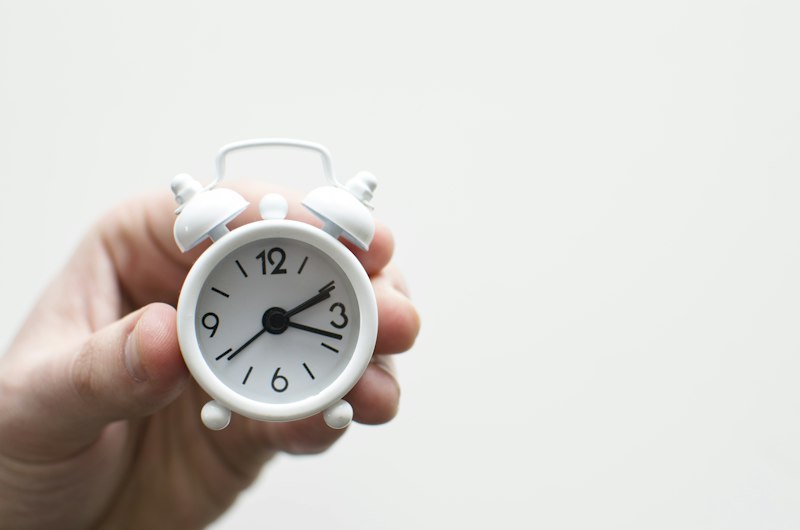
The Art of Doing One Thing at a Time
Doing one thing at a time sounds almost too simple to count as advice, yet almost nobody actually does it. Between browser tabs, notifications, and the reflex to "just quickly" check a message mid-task, most work happens in fragments instead of full attention. This is the case for treating single-tasking as a real, learnable skill, plus the specific habits that make doing one thing at a time possible in a job built around interruption.
The Real Cost of Multitasking
What feels like multitasking is almost never two things happening at once — it's rapid switching between tasks, and each switch has a cost. Researchers call this a "switch cost": every time you jump from writing an email to a coding problem and back, your brain has to reload context, and that reload takes measurable time and attention. Do it often enough across a day, and the accumulated switching cost eats a real share of otherwise productive hours, even though each individual switch feels instant.
The deeper problem is quality, not just speed. Work produced while switching between tasks tends to contain more errors and shallower thinking than work produced in one continuous block, because full attention never actually arrives on any single task — it's always half-loaded.
There's a related idea worth knowing by name: attention residue. When you switch away from a task before finishing it, a portion of your attention stays behind, still mulling over the unfinished thing. That's why answering one email in the middle of writing a report doesn't just cost the time the email took — it costs a chunk of the mental bandwidth you needed for the report, for several minutes afterward. The residue is largest when the task you left was unfinished or unresolved, which is exactly the state most interrupted tasks are in.
Why One Thing at a Time Feels So Hard Now
- Notifications are designed to interrupt. Badge counts and banners are built to pull attention immediately, not to wait for a natural pause in what you're doing.
- Open tabs function as ambient tasks. Every open tab is a small, unclosed loop your brain periodically checks on, even without an actual notification.
- "Quick checks" aren't quick. A ten-second glance at a message can cost several minutes of refocusing afterward — the glance is cheap, the recovery isn't.
- Busyness reads as productivity. Visibly juggling five things looks more like "working hard" than sitting with one task, even when the single-task approach finishes more by the end of the day.
How to Actually Do One Thing at a Time
- Close everything except the current task — not minimize, close. An open tab is a standing invitation to switch the moment things get slightly difficult.
- Write the task down before you start. A visible, specific task ("draft section 2") is harder to abandon mid-way than a vague mental intention.
- Set a single time block. Twenty-five to fifty minutes with a timer running turns "eventually" into a defined start and end.
- Put notifications on delay, not just silent. Silent still shows the badge; delay actually removes the temptation to check it.
- Let a notepad catch stray thoughts. Keep a scratch pad next to you for unrelated ideas that pop up, so you can dismiss them without losing them entirely.
Building a Workspace That Makes Single-Tasking the Default
Willpower alone rarely wins against a environment engineered for interruption. A workspace that supports one thing at a time usually has a few features in common:
- One visible task at a time, whether that's a single sticky note, one line on a whiteboard, or one item pulled from a longer list — not the full list sitting in view as a constant reminder of everything else waiting.
- A physical or visual signal that you're heads-down, even something as simple as headphones on or a closed door, so other people know not to interrupt without you having to explain it every time.
- Site or app blockers during defined blocks, not as a permanent restriction but as a way to remove the split-second decision to check something — removing the option is easier than resisting the urge repeatedly.
- A dedicated "later" list. Most of the pull toward switching tasks comes from a fear of forgetting something else — a trusted list to dump those thoughts into removes the reason to switch and check right now.
- Fewer, larger monitors or a single window at a time, if your work allows it. More visible surface area for other windows and tabs means more ambient pull away from the one you're using.
None of this requires new software. The common thread is reducing the number of small decisions available at any moment, since every visible alternative is a tiny, repeated temptation to switch.
Applying It Beyond Focused Work: Meetings and Conversations
Single-tasking isn't only a desk-work concept. The same switch cost shows up in conversations and meetings, just less visibly. Replying to a message during a meeting, or mentally drafting your next point while someone else is still talking, produces the same shallow, half-loaded attention as switching between two work tasks — the other person can usually tell, even if they can't name why the conversation feels off. Giving one person or one meeting your full attention, phone away and one browser tab at most, tends to shorten meetings rather than lengthen them, because fewer things need repeating and fewer decisions get revisited later due to something being missed the first time.
Common Mistakes When You Try to Adopt Monotasking
Most people who try single-tasking and give up within a week run into one of the same few problems:
- Blocking too long a stretch on the first attempt. A four-hour block sounds productive but is much easier to break than four separate fifty-minute ones — start smaller than feels necessary.
- Treating every task as worthy of single-tasking. Applying full-focus rules to routine, low-stakes tasks burns willpower on things that didn't need it, leaving less for the tasks that do.
- Punishing a broken streak. One interrupted block doesn't undo the value of the ones before it — the goal is a general pattern, not an unbroken streak.
- Expecting it to feel productive immediately. The first few sessions often feel slower and more uncomfortable than switching around, precisely because switching gives an illusory sense of busyness that focused work doesn't.
A Simple Comparison: Switching vs. Single-Tasking
| Task-switching | One thing at a time | |
|---|---|---|
| Feels like | Busy, in demand | Slow, at first |
| Actual output per hour | Lower, more errors | Higher, fewer errors |
| Mental fatigue by evening | High | Moderate |
| Recovery time after an interruption | Minutes, per switch | None, if left uninterrupted |
Where Single-Tasking Doesn't Apply
Single-tasking is a tool for focused, effortful work — writing, coding, studying, real conversations — not a rule for every moment of the day. Folding laundry while listening to a podcast costs nothing, because neither task demands your full working memory. The skill is recognizing which tasks are shallow enough to combine and which ones quietly lose quality the moment attention splits. If distraction is less about tools and more about avoidance in the first place, how to stop procrastinating tackles that underlying half of the problem. And if the deeper issue is less about any single task and more about a phone or feed pulling at your attention all day, digital minimalism covers the broader version of the same problem this post addresses one work block at a time.
Protecting the Time to Do One Thing
None of this works without a defended block of time, which is really a boundaries problem in disguise. If colleagues or family members treat your focused hours as interruptible by default, setting boundaries at work and at home is what actually protects the block you scheduled — the technique above only works if the time exists, uninterrupted, in the first place.
The Payoff
A single uninterrupted hour reliably produces more finished, higher-quality work than two or three fragmented hours spent hopping between tasks, without the mental fatigue that comes from constant switching. You don't need new software or a system overhaul — just one closed tab, one written task, and a timer. For more on the cognitive cost of switching between tasks, see Wikipedia's overview of human multitasking. Doing one thing at a time isn't slower. It just feels that way until you count what actually got finished.