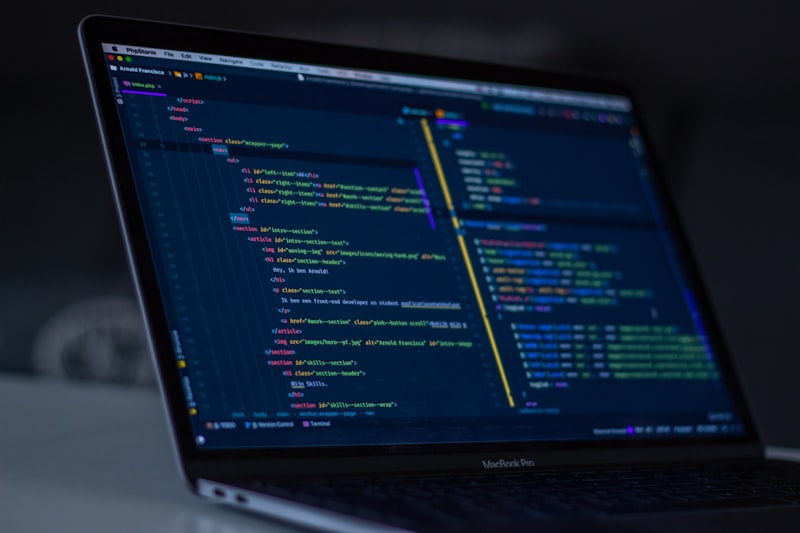
How AI Is Changing Technical Documentation Forever
Every engineering team knows documentation is important and almost none of them keep it current, because writing docs has always competed with shipping features for the same limited hours. AI is changing technical documentation by attacking that exact tradeoff — generating, updating, and maintaining docs as a byproduct of the work engineers are already doing, rather than a separate task someone has to remember to do.
Why Technical Documentation Has Always Been Neglected
The problem was never that engineers don't understand the value of good docs. It's that documentation decays the moment code changes, and nobody owns the job of noticing. A function gets refactored, its parameters change, and the doc page describing it quietly becomes wrong — sometimes for months, until a confused new hire files a ticket asking why the example in the README doesn't work.
Traditional fixes — documentation sprints, style guides, a dedicated technical writer reviewing every pull request — help, but they don't solve the root cause: docs are maintained separately from the code they describe, by a different process, on a different schedule. Anything separate from the thing it describes drifts.
How AI Is Changing Technical Documentation Day to Day
The shift underway addresses that root cause directly, in a few concrete ways:
- Docs generated from the diff. When a pull request changes a public function's signature or behavior, an AI system drafts the corresponding documentation update in the same PR, so the doc change ships atomically with the code change instead of trailing behind it.
- Drift detection. Tools now scan existing documentation against the current codebase and flag pages that reference deprecated functions, renamed parameters, or removed features — turning documentation staleness from an invisible problem into a visible, trackable one.
- Example code that's actually tested. Code samples embedded in docs can be extracted and run against the real codebase in CI, so a documentation example that no longer compiles fails the build instead of silently misleading the next reader.
- Plain-English summaries of dense reference material. API references generated from code comments are often technically complete but hard to use as a starting point. AI-generated overviews sit on top of that reference material, giving a newcomer a narrative path through it.
Common Mistakes Teams Make Adopting AI Documentation Tools
Most of the frustration teams report with AI documentation tools traces back to a handful of avoidable setup mistakes, not a flaw in the underlying idea:
- Turning on generation without a review gate. Publishing AI-drafted docs straight to production is worse than having no docs at all, because a confident, well-formatted page earns more trust from readers than an obvious stub — right up until it costs someone an afternoon.
- Treating adoption as a one-time migration. Some teams run a big-bang rewrite of the entire docs site, feel good about the result, and then let the process that generated it lapse. Without a recurring generation step wired into the PR pipeline, the new docs decay exactly like the old ones did.
- Assuming the tool removes the need for an owner. Someone still has to decide what's worth documenting, catch tone drift across pages, and resolve cases where the AI's summary technically describes the code but misses the reason a feature exists.
- Forgetting non-text assets. AI tools are strong at keeping prose and code samples current but weak at noticing that a screenshot, architecture diagram, or flowchart no longer matches the system it depicts — those still need a human sweep.
- Skipping a house style guide. Feed the generator no guidance on tone, terminology, or formatting conventions, and pages written by different contributors — or generated in different sessions — end up reading like they came from different products.
Choosing the Right Approach for Your Team's Size
The right level of tooling depends heavily on team size, and over-investing early is as common a mistake as under-investing:
- Small teams (a handful of engineers). A lightweight setup works best: doc comments in the code, a generation step wired into CI, and a lightweight review by whoever touched the code last. No dedicated documentation platform needed yet.
- Mid-size teams. This is usually where drift detection earns its keep, along with a named owner — often a senior engineer or a technical writer working part-time on docs — who reviews generated changes before they publish.
- Larger organizations. At scale, it's worth investing in a proper documentation platform that integrates with the PR pipeline, supports versioning across multiple product releases, and gives a dedicated writing team staging environments to review generated drafts before they go live.
Matching the tooling to the team's actual size avoids two opposite failure modes: gold-plating a two-person startup's docs with enterprise tooling nobody has time to maintain, and asking a 200-engineer org to keep docs current with the same ad hoc process that worked fine for five people.
Docs That Write Themselves From the Code
The most mature version of this pattern treats source code, not a separate wiki, as the single source of truth. Comments, type signatures, and even commit history feed a system that generates the human-readable documentation layer on demand, regenerating it automatically whenever the underlying code changes. This is a meaningfully different model from "write docs, then remember to update them" — it's closer to how compiled documentation from code comments has worked for years, but with enough language understanding to produce genuinely readable prose instead of a bare parameter list.
This same pattern — generate the artifact from the source of truth rather than maintaining a separate copy by hand — shows up in AI-native databases that let you query data in plain English too, where the semantic layer plays a similar role to a documentation system: a living description of what the underlying structure actually means.
The Trust Problem: Can You Ship AI-Written Docs Unedited?
Not yet, and teams that try to skip human review learn why quickly. AI-generated documentation is fluent by default, which is exactly what makes it dangerous unedited — a confidently wrong explanation of an API's behavior reads just as convincingly as a correct one, and a reader has no way to tell the difference from the prose alone. The failure mode isn't obviously broken docs; it's plausible-sounding docs that are subtly wrong in a way that costs a developer an afternoon to discover.
The teams doing this well keep a human in the loop at a specific point: a subject-matter expert reviews generated documentation against actual system behavior before it publishes, the same way a technical editor would review a contractor's draft. That review step is faster than writing from scratch, but it isn't optional. Google's own technical writing courses, originally built to train Google engineers to write clearer documentation, remain a solid reference for the clarity and accuracy standards that any documentation — human-written or AI-assisted — should be held to.
What Technical Writers Do Now
The role isn't disappearing; it's moving up a level. Where a technical writer used to spend most of their time producing first-draft content, the job increasingly centers on information architecture — deciding what should be documented at all, structuring how concepts build on each other, and editing AI-generated drafts for accuracy and tone. Writers who also understand the underlying system well enough to catch a subtly wrong generated explanation are more valuable than ever, not less, because that verification step is exactly where the current generation of tools still needs a human. The productivity gains this unlocks echo what we've seen with AI agents managing entire calendars — the tool absorbs the repetitive mechanics, and the human's time shifts toward judgment calls the tool can't make.
Where Documentation Is Headed
The near-term direction is documentation that adapts to the reader rather than presenting one fixed page to everyone. A beginner asking about an API might get a walkthrough with more context and simpler examples; an experienced engineer asking the same question might get a terser answer with a direct link to the relevant source. Some platforms already generate this kind of adaptive response on demand rather than maintaining multiple static versions of the same page.
Further out, expect documentation to become genuinely conversational and current by default — a system you can ask a follow-up question of, that answers from the actual current state of the codebase rather than a document that might be three sprints out of date. That's the real promise here: not prettier docs, but docs that stop lying to you the moment the underlying code changes.
Frequently Asked Questions
Will AI make technical writers obsolete? No — it removes the first-draft grind, not the judgment. Someone still has to decide what deserves documentation, verify that generated explanations match real system behavior, and keep tone consistent across a whole product. That work is arguably more interesting than transcribing API parameters by hand.
Can generated docs go live without any human review? Not reliably. Fluent, confident-sounding text is exactly what makes an unreviewed AI-written page risky — a wrong explanation reads as convincingly as a correct one, so a review step against real system behavior is still necessary before publishing.
What's the easiest first step for a small team with no documentation budget? Start with doc comments in the code and a generation step wired into your existing CI pipeline. That alone gets you docs that update automatically when the code does, without buying or building a dedicated platform.
Does this work for an old codebase with sparse comments? It's harder, since these tools generate from whatever signal exists in the source — comments, types, tests, commit history. The practical approach is to annotate the highest-traffic modules first rather than trying to backfill comments everywhere at once.